
Spanish for Beginners: What Actually Worked (and What Didn't)
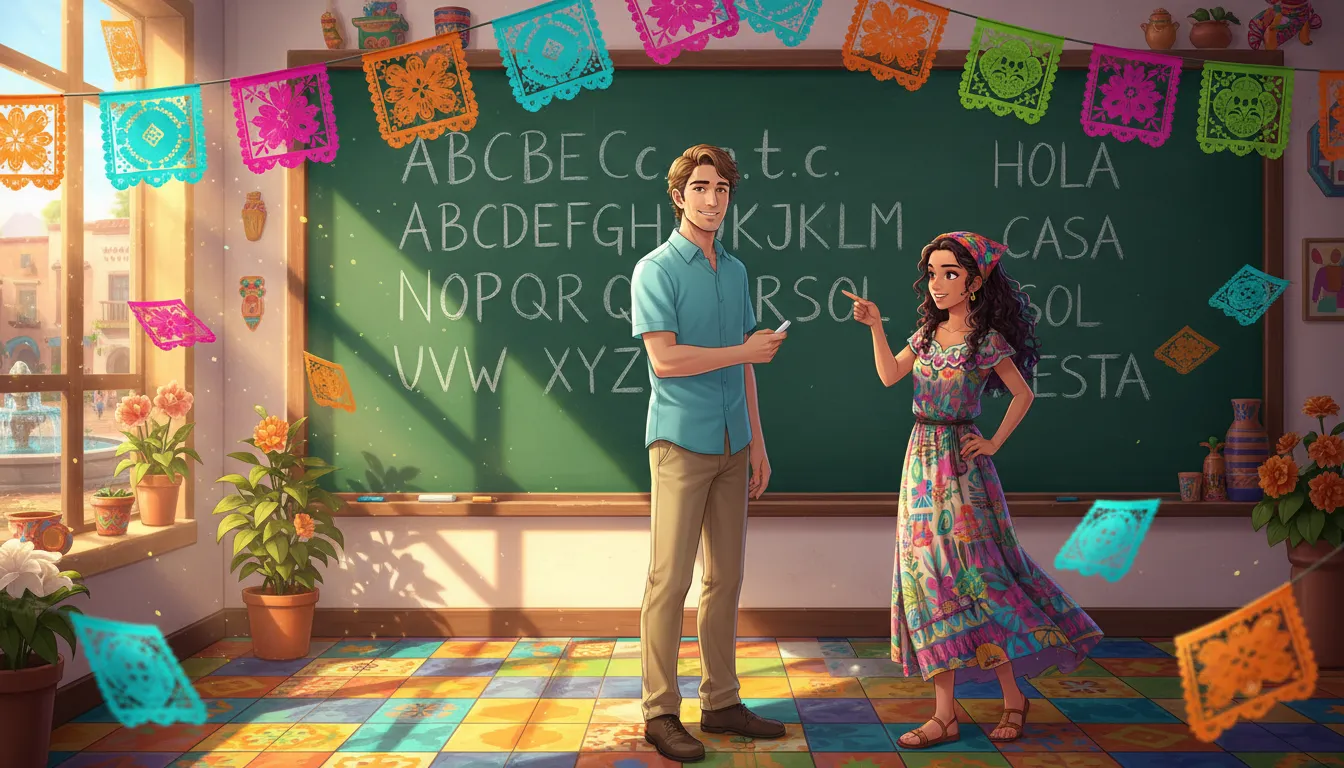
Spanish was the language that clicked for me faster than any other. Not because I was smarter about it, but because I stumbled into the right approach - partly by accident, partly through painful trial and error.
I'd already learned Russian (my native language), picked up conversational Mandarin during a year in Beijing, and dabbled in French. But Spanish? Spanish felt different. Within three months, I was having real conversations. Within six months, I was traveling through Mexico and Colombia, ordering food, asking for directions, and even cracking jokes with locals.
Here's the thing - Spanish is uniquely suited for beginners. The pronunciation is straightforward, thousands of words overlap with English, and the grammar, while challenging, follows predictable patterns. But there are traps. Big ones. I fell into most of them, and I want to help you avoid the same mistakes.
This isn't a comprehensive guide to how to learn Spanish. This is my personal experience - what worked, what bombed, and what I'd do differently if I started over tomorrow.
Pronunciation Is Almost What You See
One of Spanish's greatest gifts to beginners is that it's phonetic. If you can read it, you can say it. There are no silent letters hiding around corners like in French (bureau), no tonal nightmares like in Mandarin, and no vowel chaos like in English (read vs read).
When I started, I expected pronunciation to be a six-month project. Instead, I got 90% of the way there in two weeks just by learning the vowel sounds and a few consonant rules.
The vowels are clean and consistent:
- A sounds like "ah" (padre)
- E sounds like "eh" (leche)
- I sounds like "ee" (sí)
- O sounds like "oh" (loco)
- U sounds like "oo" (tú)
Every. Single. Time.
The consonants mostly match English, with three major exceptions that tripped me up:
The Rolled R: This was my nemesis. I spent weeks trying to roll my Rs like a flamenco dancer. My tongue wouldn't cooperate. I watched YouTube tutorials, practiced in the car, and sounded like a broken engine. Eventually, I learned that a soft tap (like a British "tt" in "butter") works for single R, and the rolled RR comes with time. Most native speakers understood me fine even when I butchered it.
The J Sound: It's not the English J. It's a throaty sound, like clearing your throat. "Ajo" (garlic) sounds like "AH-ho" with a raspy H. I kept pronouncing "trabajar" (to work) like "tra-BAH-jar" instead of "tra-ba-HAR." Locals gently corrected me about a dozen times before it stuck.
The Soft D: Between vowels, the D almost disappears. "Nada" (nothing) doesn't sound like "NAH-da" but more like "NAH-tha" with a super soft TH. I didn't even notice this until month three, and once I started hearing it, I couldn't unhear it.
Still, compared to other languages, Spanish pronunciation is a layup. You won't sound native immediately, but you'll be understood - and that's what matters when you're starting out.
The Cognate Goldmine
This is where Spanish becomes absurdly beginner-friendly. If you speak English, you already know thousands of Spanish words. You just don't know you know them.
Cognates are words that look and sound similar across languages. Spanish and English share a staggering number of them, thanks to both languages borrowing heavily from Latin.
When I started learning, I made flashcards for these cognates and realized I could skip 80% of them. They were already in my head:
- Nation → Nación
- Important → Importante
- Hospital → Hospital
- Professor → Profesor
- Color → Color
- Family → Familia
- Music → Música
- Telephone → Teléfono
The pattern is everywhere. Words ending in "-tion" in English usually become "-ción" in Spanish. Words ending in "-ty" become "-dad" (reality → realidad, university → universidad). Words ending in "-ous" become "-oso" (famous → famoso, dangerous → peligroso).
On day one, I felt like I had a 30% head start. It was intoxicating. I could read restaurant menus, signs, and basic news articles without formally studying vocabulary.
But there's a dark side to this cognate goldmine - the false friends.
But Watch Out for False Friends
False friends are words that look like English but mean something completely different. They're linguistic landmines, and I stepped on nearly all of them.
The most embarrassing moment of my Spanish learning journey happened in Bogotá. I was chatting with a local at a café, trying to explain that I was embarrassed about my terrible accent. I said, "Estoy muy embarazado."
She looked at me, confused. Then she started laughing. Hard.
Turns out, "embarazado" doesn't mean embarrassed. It means pregnant.
I'm a guy.
What I should have said was "avergonzado" (embarrassed) or "apenado" (ashamed). Lesson learned - painfully.
Here are the false friends that got me (and will probably get you too):
- Actual - Doesn't mean "actual." It means "current." (El presidente actual = The current president)
- Éxito - Doesn't mean "exit." It means "success." (Exit is "salida.")
- Realizar - Doesn't mean "realize" (as in understand). It means "to carry out" or "to accomplish." (Realize is "darse cuenta.")
- Soportar - Doesn't mean "support." It means "to tolerate" or "endure." (Support is "apoyar.")
- Largo - Doesn't mean "large." It means "long." (Large is "grande.")
- Constipado - Doesn't mean "constipated." It means you have a cold. (Constipated is "estreñido.")
I made a rule after the embarazado disaster: if a word looks too perfect, double-check it. Google Translate became my best friend (and saved me from several more humiliations).
Ser vs Estar Almost Broke Me
English has one verb for "to be." Spanish has two: ser and estar. Both mean "to be," but they're not interchangeable. Using the wrong one doesn't just sound off - it changes the meaning.
This nearly broke me. I'd say "estoy aburrido" (I'm bored) when I meant to say "soy aburrido" (I'm boring). I'd tell people "soy en la casa" (I am the house??) instead of "estoy en la casa" (I'm at home).
The textbook explanation is: ser is for permanent things, estar is for temporary things. Great in theory. Useless in practice.
Here's what actually helped me:
Ser is for identity and characteristics:
- Soy Victor. (I'm Victor.)
- Soy estadounidense. (I'm American.)
- La pizza es deliciosa. (Pizza is delicious - it's a characteristic of pizza.)
- Es lunes. (It's Monday.)
Estar is for location and states:
- Estoy en Madrid. (I'm in Madrid.)
- Estoy cansado. (I'm tired.)
- La pizza está fría. (The pizza is cold - it's a current state, not a permanent trait.)
- Estoy aprendiendo español. (I'm learning Spanish - it's a process.)
The key insight that saved me: ser is about what something IS. Estar is about where something is or how it is right now.
But even this rule has exceptions. "Estoy muerto" (I'm dead) uses estar, even though being dead is pretty permanent. Spanish logic, I guess.
I drilled this with Victor AI for weeks, building hundreds of example sentences until the pattern became automatic. It still trips me up occasionally, but now I catch it before I speak.
Subjunctive - The Grammar Boss Battle
Every language has a grammar boss battle - the concept that makes beginners cry. In Spanish, it's the subjunctive mood.
English barely uses subjunctive. We have tiny remnants of it ("If I were rich..." instead of "If I was rich..."), but it's nearly extinct. Spanish uses subjunctive constantly. You can't avoid it.
The subjunctive expresses doubt, desire, emotion, uncertainty, or hypothetical situations. It's how you say things that aren't facts.
Examples:
- Espero que vengas. (I hope that you come.)
- Dudo que sea verdad. (I doubt that it's true.)
- Es importante que estudies. (It's important that you study.)
I tried learning the subjunctive by memorizing conjugation tables. It was hell. I'd stare at charts of -ar, -er, and -ir verbs in present subjunctive, imperfect subjunctive, and pluperfect subjunctive, and my brain would shut down.
What worked instead: learning the triggers. Certain phrases always require subjunctive. I made a list:
- Espero que... (I hope that...)
- Dudo que... (I doubt that...)
- Es posible que... (It's possible that...)
- Ojalá que... (I wish that...)
- Quiero que... (I want that...)
- Cuando... (when - in the future)
Whenever I used one of those phrases, subjunctive followed. I didn't worry about why. I just drilled the pattern until it became muscle memory.
The turning point came when I stopped trying to understand the theory and started listening for the pattern in real conversations. I watched Spanish YouTubers, listened to podcasts, and paid attention to when subjunctive showed up. Once I heard it enough, I started using it naturally.
Pro tip: don't let subjunctive stop you from speaking. Even if you mess it up, people understand you. Perfection comes later.
Regional Differences - Spain Spanish vs Latin American Spanish
One question every beginner asks: Should I learn Spain Spanish or Latin American Spanish?
I learned Latin American Spanish (specifically Mexican Spanish) because I was planning a trip to Mexico. But I've since spent time in Spain, and the differences are bigger than I expected.
Pronunciation:
- Spain uses the "th" sound for Z and C (before E or I). "Gracias" sounds like "gra-thee-as." In Latin America, it's "gra-see-as."
- Spain pronounces double L (ll) like a "y" sound, but in Argentina, it sounds like "sh" or "zh."
Vosotros:
- Spain uses "vosotros" (you all, informal plural). Latin America uses "ustedes" for both formal and informal plural.
- If you learn Latin American Spanish, you can skip vosotros entirely. If you learn Spain Spanish, you'll sound formal in Latin America.
Vocabulary:
- Computer: "ordenador" (Spain) vs "computadora" (Latin America)
- Car: "coche" (Spain) vs "carro" or "auto" (Latin America)
- To catch: "coger" (Spain, totally normal) vs... don't use "coger" in Mexico. It's vulgar. Use "agarrar."
My recommendation: Learn Latin American Spanish. It's more widely spoken (420 million speakers in Latin America vs 47 million in Spain), and it's easier for beginners because you can skip vosotros.
But honestly? The differences are minor. Spanish speakers across the world understand each other just fine. Pick one, commit, and don't overthink it.
Speaking From Day One
The biggest mistake I made with Mandarin and French was waiting too long to speak. I spent months building vocabulary and memorizing grammar rules before attempting a conversation. By the time I finally spoke, I was terrified, rusty, and robotic.
With Spanish, I forced myself to speak from day one. Badly. With horrible pronunciation, broken grammar, and frequent pauses to Google words mid-sentence.
And it worked.
Spanish is the perfect language to start speaking immediately because:
- Pronunciation is forgiving. Even if you butcher the accent, Spanish speakers usually understand you.
- People are encouraging. Spanish speakers (especially in Latin America) are incredibly patient with learners. They'll slow down, simplify, and help you find the right word.
- You learn faster. Speaking forces you to retrieve words under pressure. It's uncomfortable, but it cements the language in your brain in a way flashcards never will.
I started with basic survival phrases:
- ¿Dónde está...? (Where is...?)
- ¿Cuánto cuesta? (How much does it cost?)
- No entiendo. (I don't understand.)
- ¿Puede hablar más despacio? (Can you speak more slowly?)
Then I graduated to describing my day, my hobbies, and asking questions. I made mistakes constantly - wrong verb tenses, mangled gender agreement, ridiculous false friends - but I kept going.
The turning point was realizing that mistakes didn't matter. Native speakers don't expect perfection. They just want to communicate. Once I let go of perfectionism, Spanish became fun.
How Victor AI Accelerated My Spanish
I'm biased here because I built Victor AI, but I have to be honest - this is the tool I wish existed when I started learning Spanish.
The problem with traditional learning methods is that speaking practice is hard to access. You can't always find a tutor, language exchange partners cancel, and real-world conversations are intimidating when you're a beginner.
I built Victor AI to solve this: an AI conversation partner that's available 24/7, endlessly patient, and adapts to your level.
Here's how I used it for Spanish:
Daily Conversation Practice: I'd open the app, pick a topic (ordering food, talking about my day, discussing hobbies), and just start talking. The AI responded in Spanish, corrected my mistakes, and kept the conversation flowing.
Instant Corrections: If I said "yo es cansado" (mixing up ser/estar and botching gender agreement), the AI would gently correct me: "You mean 'estoy cansado' - remember, estar for states, and cansado agrees with masculine."
Building Confidence: The app doesn't judge. I could practice the same phrase twenty times, make the same mistake repeatedly, and never feel embarrassed. That safe space accelerated my progress more than anything else.
Scenario Roleplay: I'd set up specific scenarios - checking into a hotel, asking for directions, negotiating a price at a market - and practice until I felt confident. Then I'd go use those exact phrases in real life.
I'm not saying you need Victor AI to learn Spanish - plenty of people succeed with traditional methods - but it compressed my timeline from years to months. If you want to learn Spanish as a beginner, having an AI conversation partner removes the biggest barrier: access to speaking practice.
My Biggest Mistakes and What I'd Do Differently
Looking back, I made three major mistakes that slowed me down:
1. I waited too long to focus on verbs.
I spent weeks memorizing nouns - food, colors, animals - thinking that was the foundation. But Spanish is a verb-heavy language. You can communicate surprisingly well with just 50 common verbs and basic conjugations.
If I started over, I'd learn these verbs first: ser, estar, tener, hacer, ir, querer, poder, decir, ver, saber, conocer, hablar, comer, vivir, and trabajar. That's 80% of daily conversation right there.
2. I ignored gender from the start.
Every Spanish noun has a gender - masculine or feminine. I thought, "I'll worry about that later." Bad idea.
Once you learn a word without its gender, it's hard to relearn it correctly. I still mix up "el problema" (masculine, even though it ends in -a) and "la mano" (feminine, even though it ends in -o).
If I started over, I'd always learn nouns with their article: "el perro," "la casa," "el agua," "la mesa." It's a tiny extra step that saves massive headaches later.
3. I underestimated listening practice.
I could read Spanish long before I could understand spoken Spanish. Native speakers talk fast, drop syllables, and blend words together. "¿Qué hora es?" becomes "¿Qués?"
I should have started listening practice earlier - podcasts, YouTube, TV shows - even if I didn't understand everything. Passive listening trains your ear to recognize word boundaries and natural rhythm.
If I started over, I'd listen to Spanish for 30 minutes a day from day one, even if it was just background noise while cooking or commuting.
Your First 30 Days Plan
If you're starting Spanish from scratch, here's the plan I'd follow:
Week 1: Pronunciation and Survival Phrases
- Learn the five vowel sounds and practice reading aloud.
- Memorize 20 survival phrases (greetings, thank you, where is, how much, I don't understand).
- Speak one sentence out loud every day, even if it's just to yourself.
Week 2: Core Verbs and Present Tense
- Learn the 15 most common verbs in present tense.
- Practice conjugating them with different pronouns (yo, tú, él/ella, nosotros, ellos).
- Build 10 simple sentences using these verbs.
Week 3: Nouns, Gender, and Basic Vocabulary
- Learn 50 common nouns with their gender (el/la).
- Focus on categories: food, family, daily objects.
- Start labeling objects around your house in Spanish.
Week 4: Start Speaking and Listening
- Have your first 5-minute conversation (with a tutor, language partner, or AI like Victor AI).
- Watch one 10-minute YouTube video in Spanish (with subtitles if needed).
- Start a daily habit: 10 minutes of speaking practice + 10 minutes of listening.
By day 30, you won't be fluent. But you'll have a functional foundation - enough to introduce yourself, order food, ask directions, and hold a basic conversation. That's the goal.
From there, it's just repetition, exposure, and expanding your vocabulary. If you want a deeper dive into timelines and milestones, I wrote about how long it takes to learn Spanish based on my experience.
FAQ
Q: Is Spanish hard to learn for English speakers?
No. Spanish is one of the easiest languages for English speakers to learn. It's phonetic, shares thousands of cognates with English, and has relatively straightforward grammar. The Foreign Service Institute ranks it as a Category I language - meaning you can reach professional fluency in about 600-750 hours of study.
That said, "easy" doesn't mean effortless. Verb conjugations, subjunctive mood, and ser/estar will challenge you. But compared to Arabic, Mandarin, or Russian? Spanish is a walk in the park.
Q: Can I learn Spanish in 3 months?
You can reach conversational Spanish in 3 months if you're consistent. I did it by speaking daily, focusing on high-frequency words, and immersing myself in the language. But fluency - reading novels, understanding rapid-fire conversations, expressing complex ideas - takes 1-2 years of steady practice.
Three months gets you to "I can survive in a Spanish-speaking country and have basic conversations." It's enough to travel, make friends, and feel confident. It's not enough to debate politics or watch TV without subtitles.
Q: Should I learn grammar rules or just speak?
Both, but speaking comes first. I wasted months memorizing grammar charts without speaking, and it didn't stick. Grammar is important, but it should support speaking, not replace it.
My approach: Learn just enough grammar to form basic sentences, then speak as much as possible. When you make a mistake, look up the rule. That's when grammar becomes useful - when it solves a real problem you encountered while trying to communicate.
Q: What's the best way to practice Spanish if I don't have anyone to talk to?
This was my problem too. I didn't have Spanish-speaking friends nearby, and scheduling tutors was expensive and inconsistent.
I used three strategies:
- AI conversation apps like Victor AI for daily speaking practice.
- Language exchange apps (Tandem, HelloTalk) to connect with native speakers online.
- Self-talk - I literally narrated my day in Spanish while cooking, walking, or driving. It sounds ridiculous, but it works.
The key is to speak out loud every single day, even if it's just 5 minutes. Your brain needs repetition to automate the language.
Q: Should I use Duolingo or a textbook?
I used both, and they're useful for different things. Duolingo is great for building vocabulary and basic grammar in short, gamified bursts. It's low-pressure and easy to stick with. But it won't get you to fluency on its own - it's too passive.
Textbooks are better for understanding grammar rules and sentence structure, but they're boring and hard to stay motivated with.
My recommendation: Use Duolingo for daily vocabulary review (10-15 minutes), use a textbook for grammar reference when you're confused, and spend the bulk of your time speaking and listening. Apps like Victor AI fill the gap - they give you structured practice with the interactivity of conversation.
Spanish was the first language where I felt truly fluent. Not perfect - I still make mistakes, still search for words, still mix up gender occasionally - but fluent enough to live in Spanish-speaking countries, make friends, and forget I'm speaking a second language.
If you're just starting out, my advice is simple: speak early, speak often, and don't wait for perfection. Spanish rewards action over theory. The sooner you start making mistakes, the sooner you'll stop making them.
And if you want a tool that makes daily speaking practice effortless, give Victor AI a try. I built it because I needed it when I was learning - and I think you'll find it useful too.
Buena suerte. You've got this.
Ready to Start Your Language Journey?
Join 100,000+ learners using Victor AI to become conversational.
Download Victor AI Free