
Portuguese for Beginners: Why I Picked Brazilian and Never Looked Back
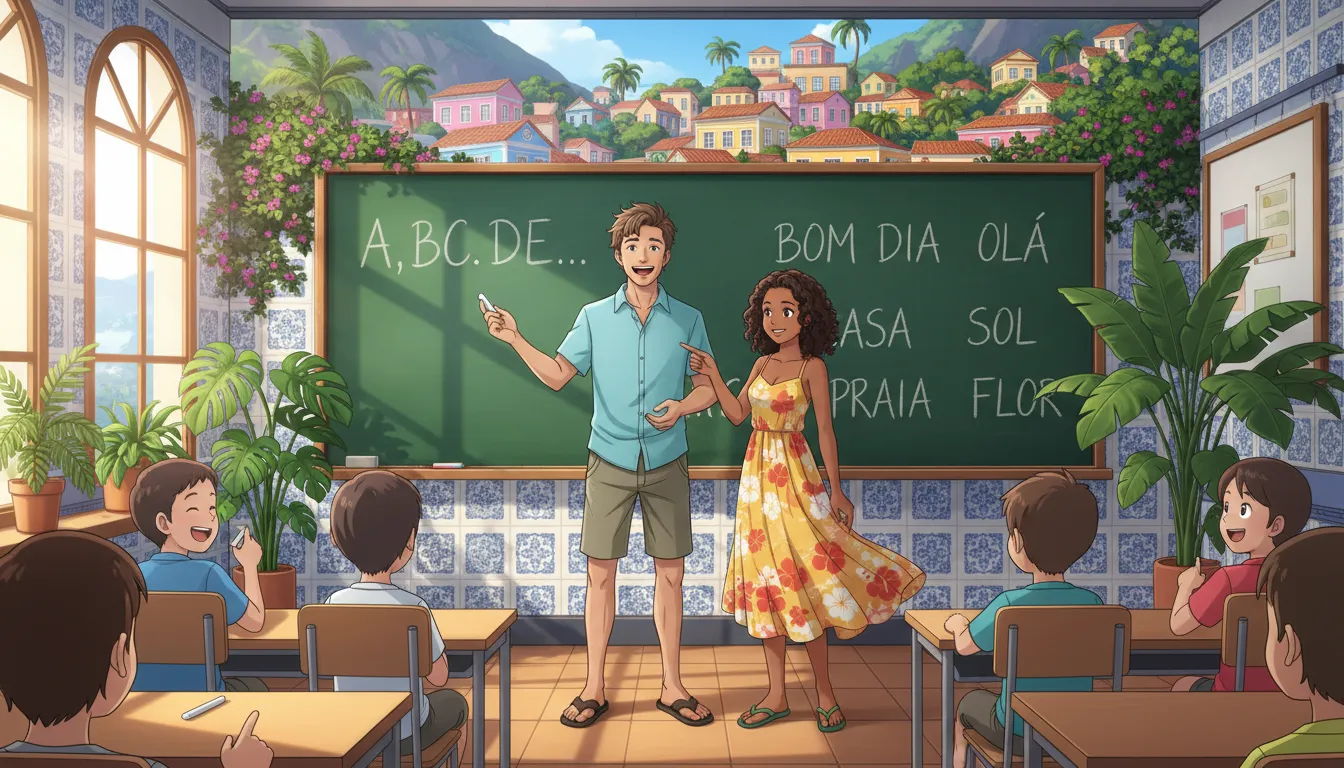
I'll be honest - I didn't plan to learn Portuguese. It wasn't on my radar at all. But after spending two weeks in Rio de Janeiro, watching the sunrise over Copacabana, getting lost in Lapa's nightlife, and trying to order açaí in broken Spanish, something clicked.
Brazil is massive. It's the 9th largest economy in the world. Over 220 million people speak Portuguese natively, and most of them are in Brazil. The music, the energy, the warmth of the people - it all hit differently. I came back home and immediately thought: I need to learn this language.
That was 18 months ago. Now I'm conversational, I can hold real discussions about business and culture, and I've made friends across São Paulo, Porto Alegre, and Salvador. But getting here was nothing like I expected.
This isn't a textbook guide. This is my real experience as a beginner learning Portuguese - the mistakes I made, the breakthroughs that changed everything, and the honest truth about what it takes.
Brazilian vs European Portuguese: I Chose Brazilian
One of the first decisions you'll make is which Portuguese to learn. European Portuguese (spoken in Portugal) and Brazilian Portuguese are different enough that speakers sometimes struggle to understand each other.
I chose Brazilian Portuguese, and here's why:
More speakers. Brazil has 215 million people. Portugal has 10 million. If you're learning for business, travel, or cultural immersion, the numbers speak for themselves.
More content. Netflix, YouTube, Spotify - Brazilian content dominates. Music, podcasts, TV shows, movies. If you want immersion material, Brazilian Portuguese gives you endless options.
Pronunciation. This is controversial, but I found Brazilian Portuguese easier to pronounce as an English speaker. European Portuguese drops a lot of vowels, making it sound more closed and fast. Brazilian Portuguese is more open, more musical. Vowels are clearer.
Cultural pull. I was drawn to Brazil - the culture, the business opportunities, the people. If Portugal or Angola speaks to you more, learn European Portuguese. But for me, it was always about Brazil.
The differences are real. Vocabulary, pronunciation, even some grammar. But they're manageable. Brazilians understand European Portuguese (they watch Portuguese soccer). Portuguese people understand Brazilian Portuguese (they watch Brazilian TV). You're not locked into one forever.
I use Victor AI to practice Brazilian Portuguese daily, and the AI tutor adapts to the specific vocabulary and pronunciation patterns I need.
The Spanish Trap: Blessing and Curse
I already spoke Spanish when I started Portuguese. I thought this would make things easy. It did not.
Portuguese and Spanish share about 89% lexical similarity. That sounds great until you realize that 11% difference is a minefield of false friends, pronunciation traps, and grammar quirks that will make native speakers stare at you in confusion.
Here's what happened to me:
False friends everywhere. "Esquisito" in Spanish means "exquisite." In Portuguese, it means "weird." I complimented someone's cooking by calling it weird. "Embarazada" in Spanish means "pregnant." "Embaraçado" in Portuguese means "embarrassed." I told someone I was pregnant when I meant I was embarrassed. These mistakes are humiliating.
Pronunciation interference. Spanish pronunciation is straightforward. Portuguese pronunciation is not. I kept applying Spanish rules to Portuguese words and sounding completely off. The nasal vowels, the vowel reduction, the "r" sounds - none of it mapped cleanly from Spanish.
The temptation to just speak "Portuñol." Portuñol is the Spanglish of Portuguese and Spanish. You throw Portuguese words into Spanish grammar and hope for the best. It's tempting. It's also a trap. Brazilians will understand you (they're incredibly patient), but you'll never sound natural.
My advice? If you speak Spanish, acknowledge it's helpful for reading and vocabulary recognition. But treat Portuguese pronunciation and grammar as completely new. Don't shortcut. You'll thank yourself later.
Pronunciation Is the Hidden Challenge
This was my biggest shock. Portuguese pronunciation is hard. Way harder than I expected.
Written Portuguese looks like Spanish. "Obrigado" (thank you) looks simple. But when Brazilians say it, it sounds like "obrigadu" - the "o" becomes "u," the final "o" becomes "u," and the "d" softens. Vowel reduction is everywhere.
Then there are the nasal vowels. Portuguese has sounds that don't exist in English or Spanish. "Pão" (bread) has a nasal "ão" sound. "Mãe" (mother) has a nasal "ãe" sound. I spent weeks trying to get these right, and I still mess them up sometimes.
The "r" sound is another one. In Rio, it's a soft "h" sound, like in "hello." In São Paulo, it's more like a hard "h" from your throat. In Portugal, it's rolled. Regional variation is real.
And don't get me started on liaison. Portuguese speakers connect words together in ways that make individual words disappear. "Está aqui" (it's here) sounds like "tá qui" in casual speech. You need to train your ear to hear where one word ends and another begins.
I used Victor AI every single day to practice pronunciation. The AI tutor corrects my nasal vowels, models natural speech, and doesn't judge me when I butcher "açúcar" for the tenth time. That daily practice made the difference.
Verb Conjugation Overload
Portuguese conjugates everything. And I mean everything.
Six persons (eu, tu, ele/ela, nós, vós, eles/elas). Multiple tenses (present, preterite, imperfect, future, conditional, plus subjunctive versions of all of them). And then there's the personal infinitive - a feature unique to Portuguese where even the infinitive form conjugates.
Let me give you an example. In English, you say "It's important for us to study." In Spanish, you say "Es importante que estudiemos" (It's important that we study). In Portuguese, you say "É importante estudarmos" - the infinitive "estudar" conjugates to "estudarmos" to match "we." This doesn't exist in Spanish or English.
I spent my first two months drowning in conjugation tables. I memorized charts. I did Anki flashcards. I felt like I was getting nowhere.
Here's what finally worked:
Focus on the most common tenses first. Present, preterite (past), and future. That's 80% of daily conversation. Ignore the rest until you're intermediate.
Learn verb patterns, not individual verbs. Portuguese verbs follow patterns (-ar, -er, -ir regular verbs, plus common irregular patterns). Once you know the pattern, you can conjugate hundreds of verbs.
Use them in context, not isolation. I stopped memorizing conjugation tables and started using Victor AI to practice verbs in real sentences. The AI tutor creates scenarios where I have to use past tense, future tense, subjunctive - but in context, not as a drill.
Verb conjugation still trips me up. But it's no longer a wall. It's just part of the process.
The Warmth of Brazilian Culture
This is the best part of learning Portuguese, hands down.
Brazilians are incredibly encouraging to language learners. They celebrate your attempts. They don't correct you harshly - they gently guide you. They smile when you mess up and help you fix it.
I've had Brazilians stop me mid-sentence to teach me a better way to say something, then repeat it back to me three times to make sure I got it. I've had waiters in São Paulo switch to slower Portuguese when they saw me struggling, not switching to English but helping me stay in Portuguese.
This cultural warmth makes practicing so much easier. You don't feel judged. You feel supported.
Compare that to French (which I also speak). In Paris, if you butcher French, you might get an eye roll or a switch to English. In Brazil, if you butcher Portuguese, you get encouragement and a high-five for trying.
That emotional safety net is huge when you're a beginner. It keeps you speaking even when you're scared.
Music as a Learning Tool
Brazilian music is one of the best tools for learning Portuguese. And it's incredible music on its own.
I started with bossa nova - Tom Jobim, João Gilberto, Vinicius de Moraes. The lyrics are poetic, the tempo is slow, and the pronunciation is clear. "Garota de Ipanema" (The Girl from Ipanema) was one of my first songs. I listened to it on repeat until I could sing along.
Then I moved to MPB (Música Popular Brasileira) - Caetano Veloso, Gilberto Gil, Marisa Monte. More complex lyrics, more vocabulary, more cultural references.
Then sertanejo (Brazilian country music) - Zezé Di Camargo & Luciano, Luan Santana. This is what everyday Brazilians listen to. The vocabulary is conversational, the themes are universal (love, heartbreak, partying).
Then funk carioca and Brazilian hip-hop - Anitta, Ludmilla, Emicida. Fast, slang-heavy, regional. This is where you learn how people actually talk.
Music does something textbooks can't. It teaches rhythm, intonation, emotion. You internalize the language through melody. And Brazilian music is so good that you'll want to listen even when you're not studying.
I still listen to Brazilian music every single day. It's part of my routine now.
Speaking Practice Daily: From Textbook to Real Conversation
You can study Portuguese for months and still freeze when someone asks you a question. I know because that was me.
I spent three months doing Duolingo, reading grammar books, watching YouTube videos. I could read Portuguese pretty well. I understood a lot when I listened. But when it came time to speak, I panicked.
The problem was simple: I wasn't practicing speaking.
I tried language exchange apps. They helped, but scheduling was hard, and I felt self-conscious making mistakes with real people.
Then I built Victor AI - partly because I needed it myself. The AI tutor lets me practice speaking Portuguese every single day, on my schedule, without judgment. I can make mistakes. I can ask the same question five times. I can practice ordering food, asking for directions, talking about my work, discussing Brazilian politics - whatever I need.
The AI corrects me in real-time, explains why something is wrong, and gives me natural alternatives. It's like having a patient Brazilian friend available 24/7.
That daily speaking practice changed everything. Within two months, I went from freezing in conversations to holding 20-minute discussions in Portuguese. I'm not fluent yet, but I'm conversational. And that's the goal.
If you're serious about learning Portuguese, you need to speak every single day. Not once a week. Not when you feel ready. Every day. Find a way to make that happen.
My Biggest Mistakes and What I'd Do Differently
Looking back, here's what I wish I'd known from day one:
Mistake 1: I waited too long to start speaking. I spent months building vocabulary and studying grammar before I tried to speak. That was a waste. Start speaking on day one, even if it's just "Oi, meu nome é Victor."
Mistake 2: I ignored pronunciation early on. I focused on vocabulary and grammar, assuming pronunciation would fix itself. It didn't. I developed bad habits that took months to unlearn. Work on pronunciation from the beginning.
Mistake 3: I studied European Portuguese materials by accident. I didn't realize some textbooks and apps teach European Portuguese, not Brazilian. I learned vocabulary and pronunciation that Brazilians didn't recognize. Make sure your resources match your target dialect.
Mistake 4: I didn't immerse enough. I studied Portuguese for 30 minutes a day and then switched back to English. That's not enough. Change your phone to Portuguese. Watch Brazilian YouTube. Listen to Brazilian podcasts. Surround yourself with the language.
Mistake 5: I was too scared to make mistakes. I didn't want to sound stupid, so I stayed silent. That fear held me back for months. Brazilians don't care if you make mistakes. They care that you're trying. Speak badly. Make mistakes. That's how you improve.
If I started over today, I'd do this: 30 minutes of Victor AI conversation practice every morning, Brazilian music throughout the day, one Brazilian YouTube video every evening, and I'd change my phone to Portuguese immediately.
Your First 30 Days Plan
Here's what I'd do if I were starting Portuguese from scratch today.
Week 1: Foundation
- Learn basic greetings, introductions, numbers, days of the week.
- Practice pronunciation of nasal vowels and the "r" sound.
- Start speaking simple sentences out loud. Use Victor AI or talk to yourself.
- Listen to one slow Brazilian song (bossa nova) on repeat until you understand the lyrics.
Week 2: Essential Verbs
- Learn present tense conjugation for 10 common verbs: ser, estar, ter, ir, fazer, querer, poder, saber, dar, ver.
- Practice these verbs in sentences, not in isolation.
- Watch one Brazilian YouTube video with subtitles (Portuguese subtitles, not English).
- Change your phone language to Portuguese.
Week 3: Daily Conversations
- Learn vocabulary for ordering food, asking directions, shopping, small talk.
- Practice real scenarios - ordering coffee, asking where the bathroom is, introducing yourself.
- Find a Brazilian podcast you like and listen to one episode.
- Keep speaking every day.
Week 4: Expand and Immerse
- Start learning past tense (preterite).
- Read simple Brazilian news articles or blog posts.
- Watch a Brazilian TV show on Netflix (with Portuguese subtitles if needed).
- Have your first 10-minute conversation in Portuguese, even if it's with an AI tutor.
By day 30, you won't be fluent. But you'll be able to introduce yourself, order food, ask basic questions, and understand simple conversations. That's a huge win.
For a deeper breakdown of how to learn Portuguese effectively, check out my full guide.
FAQ
How long does it take to learn Portuguese for beginners?
It depends on your goals and how much time you invest. If you study 30 minutes a day, you can be conversational in 6-9 months. If you immerse yourself (1-2 hours a day), you can hit conversational fluency in 3-6 months. Check out my post on how long to learn Portuguese for a detailed breakdown.
Is Brazilian Portuguese or European Portuguese easier for beginners?
Brazilian Portuguese is generally considered easier for English speakers because the pronunciation is more open and vowels are clearer. European Portuguese drops a lot of vowels, making it sound faster and more closed. But "easier" depends on your goals - if you're moving to Portugal, learn European Portuguese.
What's the best app to learn Portuguese as a beginner?
I'm biased, but I built Victor AI specifically for speaking practice, and it's what I use every day. For a full breakdown of the best apps to learn Portuguese, check out my comparison guide.
How similar are Spanish and Portuguese?
Portuguese and Spanish share about 89% lexical similarity, meaning a lot of vocabulary overlaps. But pronunciation, grammar, and false friends make them trickier than they look. If you speak Spanish, you'll recognize written Portuguese easily, but spoken Portuguese will sound completely different.
What are the hardest parts of Portuguese for beginners?
Pronunciation (nasal vowels, vowel reduction), verb conjugation (lots of tenses and irregular verbs), and listening comprehension (Brazilians speak fast and connect words together). But with daily practice, these challenges become manageable.
Final Thoughts
Learning Portuguese as a beginner is messy, frustrating, and incredibly rewarding. You'll make embarrassing mistakes. You'll feel lost in conversations. You'll wonder if you're improving at all.
But then one day, you'll watch a Brazilian movie and realize you understood most of it without subtitles. Or you'll have a 30-minute conversation with a Brazilian friend and realize you didn't switch to English once. Or you'll hear a bossa nova song and sing along without thinking.
That's when it clicks. That's when you realize the work was worth it.
I'm not fluent yet. I still make mistakes every day. But I can connect with 220 million people I couldn't talk to before. I can enjoy Brazilian music, films, and culture on a deeper level. I can do business in Brazil. I can make friends in São Paulo.
That's what learning Portuguese has given me. And it can do the same for you.
If you're just starting out, don't overthink it. Pick Brazilian or European Portuguese, find a way to speak every day (I use Victor AI for this), and immerse yourself in the culture. The rest will follow.
Boa sorte - good luck. You've got this.
Ready to Start Your Language Journey?
Join 100,000+ learners using Victor AI to become conversational.
Download Victor AI Free